The Rupee Is Weakening: How It Can Affect Fuel, Gadgets and Travel Costs
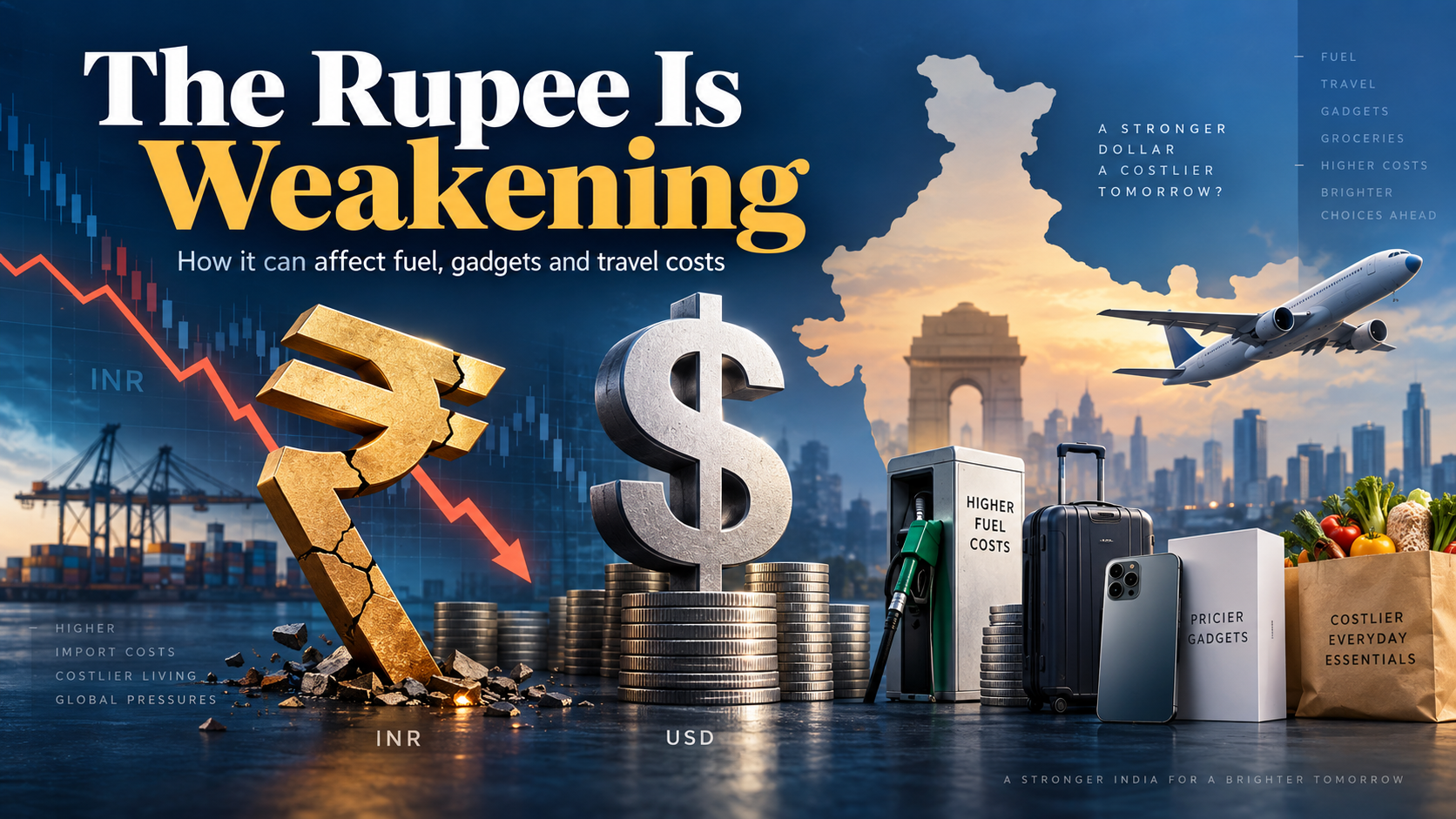
The Rupee Is Weakening: How It Can Affect Fuel, Gadgets and Travel Costs
When the Indian rupee weakens against the US dollar, imported goods and services become more expensive in rupee terms.
This matters because India imports a significant amount of crude oil, electronics, machinery, components and other essential inputs. Even if you never directly exchange rupees for dollars, currency movements can still affect your everyday expenses.
Why Does a Weak Rupee Matter?
A weaker rupee means Indian businesses and consumers need to spend more rupees to purchase the same amount of goods or services priced in dollars.
This can gradually increase costs across several areas.
⛽ Fuel & Transportation
India depends heavily on imported crude oil. If the rupee weakens, the cost of importing oil can rise. Higher fuel costs can also increase transportation and logistics expenses.
📱 Electronics & Gadgets
Smartphones, laptops, semiconductor components and other electronics often depend on imported parts. A weaker rupee can increase costs for manufacturers and retailers, which may eventually affect consumers.
✈️ International Travel
Foreign travel becomes more expensive because hotels, food, transportation and shopping are paid for in foreign currencies.
🎓 Overseas Education
Students studying abroad may face higher tuition and living expenses when converted into rupees. Families planning international education may need to budget more carefully.
🏭 Businesses & MSMEs
Companies that import machinery, raw materials or components may experience higher operating costs. This can affect manufacturing, pricing and profit margins.
🛒 Everyday Consumer Prices
Higher import and transportation costs can sometimes move through the supply chain, contributing to higher prices for certain products and services.
Who Could Feel the Impact Most?
👨👩👧 Families
Households may face pressure from higher fuel, travel and product costs.
🎓 Students
Those planning education abroad may need larger budgets.
✈️ Travellers
International holidays and business trips can become more expensive.
🏪 Small Businesses
Import-dependent MSMEs may need to manage costs, pricing and cash flow more carefully.
💼 Working Professionals
Professionals planning overseas travel, education or major electronics purchases may feel the effect directly.
What Can Businesses Do?
Businesses can prepare by focusing on:
- Better cash-flow planning
- Reviewing import dependence
- Negotiating supplier terms
- Monitoring currency movements
- Building local supplier alternatives
- Managing inventory more efficiently
- Reviewing pricing strategies
What Can Consumers Do?
Consumers can:
- Plan international travel early
- Compare prices before major electronics purchases
- Budget carefully for overseas education
- Monitor fuel and transportation expenses
- Avoid unnecessary foreign-currency spending when costs are high
The Bigger Picture
A weaker rupee is not only a financial-market issue.
It can influence household budgets, business costs, travel expenses, electronics prices and investment decisions.
Key Takeaway
Currency movements may look distant, but their effects can reach everyday life very quickly.
Understanding how the rupee moves can help both consumers and businesses make better financial decisions.